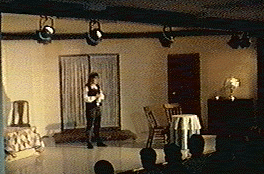
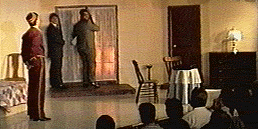
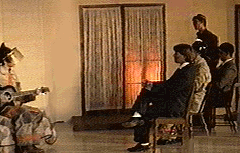
Also quite calm are the firemen who arrive; in fact, one decies to play his guitar while the building burns to imminent collapse. The men seat themselves to enjoy the music--and the glasses of water provided by the bellboy.
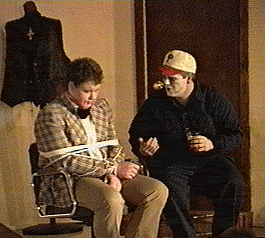
As the Young Man and the Window Washer watch the presidential motorcade on TV, the Window Washer explains what he'd do if he got into the Oval Office to confront the President.
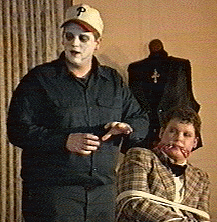
As the two reveal more about themselves, a third witness arrives--Miss Presson, from upstairs, who had earlier spoken to the Young Man on the phone, asking the Presidential poll question: "How happy are you?" Miss Presson is looking forward to seeing the President drive by below, in spite of the strange people in this apartment.
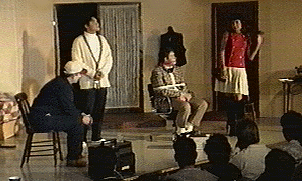
Miss Presson tosses confetti and the Window Washer tosses imsults to the passing President as the Young Man readies his rifle.
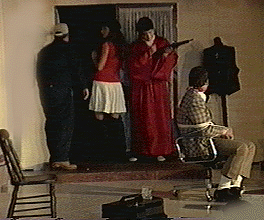
The Young Man never gets a chance to perform his symbolic act, however, as the President is shot from what sounds like every other window on the block. Miss Presson and the Window Washer flee; the Young Man ungags the salesman and waves a small American flag out the window.
A note on the make-up: since the characters are allegorical, Steve Schrum designed the make-up to be indicative of the true nature of the characters:
The Young Man had straight make-up on half his face, but the left face looked like an onnagata, the female character in Japanese Kabuki theatre. Some of the things this indicated were: his split personality, his sexual ambivalence, his place as an Asian in a Western world, window, his persona taking over...
The Window Washer's makeup was a skull, a death's head, reflecting his dead and outmoded ideas about life and his racism.